

LiveGood Organic Coffee: What’s In It, How Much Caffeine Does It Have, and Is It Worth Trying?
A closer look at LiveGood Organic Coffee, including its ingredients, caffeine content, mushroom blend, how it compares with regular coffee, and whether it may be worth trying.
LiveGood Organic Coffee caught my attention for a simple reason: coffee is already part of the morning routine for millions of people, but this isn’t quite your typical cup of coffee. Along with organic instant coffee, LiveGood adds ingredients such as mushrooms, maca, green tea, and acacia fiber to the mix.
But that raises some pretty obvious questions. How much caffeine does LiveGood coffee actually have? What are all those extra ingredients doing in there? And perhaps most importantly, is there anything that really makes it different from the coffee already sitting in your kitchen?
In this article, we’ll take a closer look at what’s actually in LiveGood Organic Coffee, how its caffeine compares with regular coffee, and what you should know before deciding whether it’s something you’d like to try.
What Is LiveGood Organic Coffee?
LiveGood Organic Coffee is an instant coffee blend that combines organic coffee with several ingredients you don’t normally find in an everyday cup of coffee. According to LiveGood, the blend includes acacia fiber, maca, green tea, and a six-mushroom blend alongside the coffee itself.
That puts it into the growing category often called functional coffee or mushroom coffee. The idea is fairly simple: instead of coffee providing only the familiar caffeine boost, additional ingredients are included to give the drink a different nutritional profile.
That doesn’t automatically mean those added ingredients make the coffee healthier or that drinking it will produce specific health benefits. We’ll look more closely at what the ingredients are—and what we actually know about them—as we go.
One thing that is important to understand right away is that LiveGood Organic Coffee is not a low-caffeine coffee simply because it contains mushrooms and other ingredients. A serving contains approximately 100 mg of caffeine, according to LiveGood’s product information.
How Much Caffeine Is in LiveGood Organic Coffee?
According to LiveGood, one serving of LiveGood Organic Coffee contains approximately 100 mg of caffeine. That puts it surprisingly close to an ordinary cup of coffee rather than making it a low-caffeine alternative simply because it contains mushrooms and other functional ingredients.
For comparison, the U.S. Food and Drug Administration says an 8-ounce cup of coffee typically contains about 80 to 100 mg of caffeine, although the amount can vary considerably depending on the coffee and how it is prepared.
So if you’re switching from regular coffee to LiveGood Organic Coffee, don’t assume you’re necessarily cutting back on caffeine. If you’re sensitive to caffeine or already drink several caffeinated beverages during the day, that approximately 100 mg per serving is worth keeping in mind.
The FDA says that for most adults, 400 mg of caffeine per day is an amount not generally associated with negative effects, but sensitivity varies significantly from person to person. Certain medications, health conditions, pregnancy and other circumstances can also affect how much caffeine may be appropriate for an individual.
What’s Actually in LiveGood Organic Coffee?
LiveGood Organic Coffee starts with organic instant coffee, but the formula goes beyond coffee alone. According to LiveGood’s product information, it also contains acacia fiber, maca, green tea, and a blend of six different mushrooms.
Those added ingredients are a big part of what separates the product from an ordinary cup of instant coffee. But seeing ingredients such as mushrooms or maca on a label doesn’t automatically tell us what they do—or whether the amounts in a serving are enough to produce a particular health benefit.
That’s an important distinction with functional foods and drinks. An ingredient may have been studied on its own, but that doesn’t necessarily mean every product containing it will provide the same results. So rather than treating the ingredient list as a collection of health promises, it makes more sense to look at what’s actually included.
The Six-Mushroom Blend
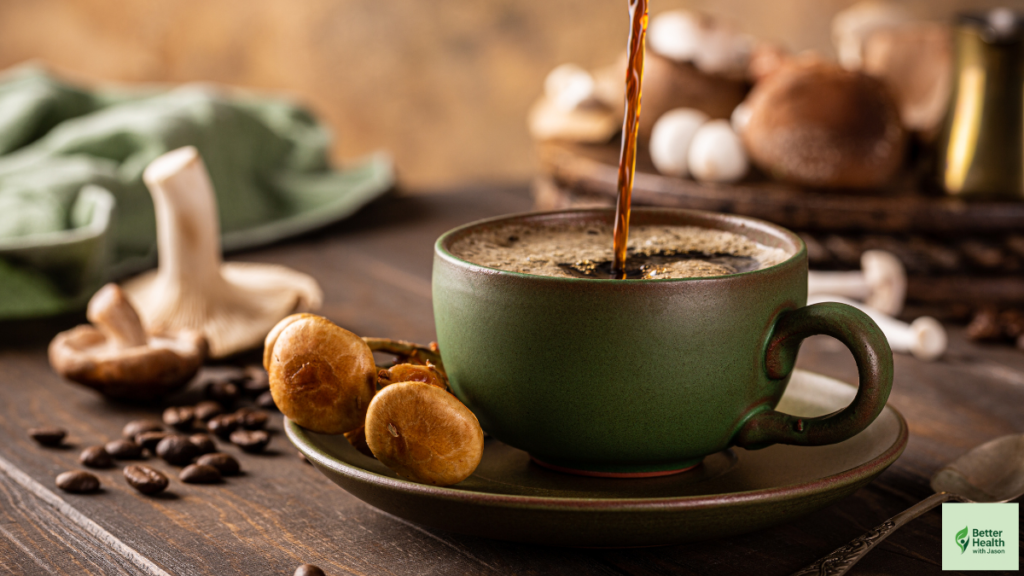
One of the more unusual ingredients in LiveGood Organic Coffee is its six-mushroom blend. The blend contains Cordyceps, Reishi, King Trumpet, Shiitake, Lion’s Mane, and Turkey Tail. These types of mushrooms are often found in products marketed as functional or adaptogenic foods and supplements.
Functional mushrooms are often promoted for benefits involving energy, focus, stress, and general wellness. However, research varies depending on the individual mushroom, the amount used, and the health outcome being studied. Simply having these mushrooms in a cup of coffee doesn’t mean we should assume the drink will provide a particular health benefit.
What we can say with confidence is that the mushrooms aren’t just mentioned on the front of the package—the company publishes testing information showing the mushroom blend as part of the actual formulation. LiveGood also makes its Organic Coffee testing documents publicly available.
What About the Maca, Green Tea, and Fiber?
Mushrooms aren’t the only extras in LiveGood Organic Coffee. The formula also includes maca, green tea, and acacia fiber, giving it a noticeably different ingredient list from ordinary instant coffee.
Maca is a plant native to the Andes that has a long history of use as a food and is now commonly found in wellness products. Green tea contains naturally occurring plant compounds and caffeine, although LiveGood states the finished coffee contains approximately 100 mg of caffeine per serving overall.
Acacia fiber is a soluble dietary fiber derived from acacia gum. Adding fiber to coffee may sound unusual, but it’s another example of how functional coffee products are being formulated to include ingredients beyond coffee beans alone.
As with the mushroom blend, though, the presence of these ingredients shouldn’t be confused with a guarantee of specific health results. The more useful question is whether the overall drink—and its caffeine level—fits your own routine and preferences.
Is LiveGood Organic Coffee Better Than Regular Coffee?
Whether LiveGood Organic Coffee is “better” than regular coffee really depends on what you’re looking for. If you simply want a traditional cup of coffee, regular coffee already provides the familiar flavor and caffeine without the added ingredients.
LiveGood Organic Coffee takes a different approach. It combines organic instant coffee with mushrooms, maca, green tea, and acacia fiber. For someone interested in functional ingredients, that may make it more appealing. For someone who only wants coffee, those extras may not matter very much.
Caffeine isn’t a major dividing line either. With approximately 100 mg per serving, LiveGood Organic Coffee falls within the range you might encounter in a typical cup of coffee. So choosing it shouldn’t be based on the assumption that mushroom coffee automatically means less caffeine.
There’s also no reason to frame this as one coffee being universally “healthier” than the other. Your total caffeine intake, when you drink it, what you add to your coffee, and how your own body responds can matter more than the word “functional” on a label.
Could the Caffeine in Your Coffee Be Affecting Your Sleep?
When you drink your coffee can matter almost as much as how much caffeine it contains. Caffeine can stay in your system for hours, which means that afternoon or evening cup may still be having an effect when it’s time to go to bed.
LiveGood itself recommends avoiding stimulants, including caffeine, for at least eight hours before bedtime. Since LiveGood Organic Coffee contains approximately 100 mg of caffeine per serving, that timing is worth considering—especially if you already know that caffeine tends to affect your sleep.
And caffeine isn’t the only possible reason you might wake up feeling exhausted. If you’re getting what seems like enough sleep but still starting the day tired, I covered several other possibilities in Why Am I Always Tired No Matter How Much I Sleep? (7 Hidden Reasons).
Paying attention to both your total caffeine intake and when you consume it can help you decide where coffee fits into your daily routine without assuming that one schedule works for everyone.
Is LiveGood Organic Coffee Worth Trying?
If you already enjoy coffee and you’re curious about functional ingredients, LiveGood Organic Coffee may be worth considering. You’re still getting a caffeinated cup of coffee, but with a different ingredient profile that includes mushrooms, maca, green tea, and acacia fiber.
That doesn’t mean everyone needs to switch from regular coffee. If you love the coffee you already drink and aren’t interested in the added ingredients, there may be little reason to change. And if you’re sensitive to caffeine, remember that approximately 100 mg per serving is still a meaningful amount.
For me, the more sensible way to look at it is not as a miracle coffee or something that’s automatically better than every other option. It’s simply a different kind of coffee with some interesting additions. Whether those additions make it worthwhile comes down to what you’re looking for, your caffeine tolerance, taste, convenience, and price.
Want to Take a Closer Look at LiveGood?
If LiveGood Organic Coffee sounds interesting but you’re not ready to make a decision based on one product, you can take a closer look at LiveGood itself. The free LiveGood tour lets you see more about the company, its products, membership pricing, and how the program works before deciding whether it’s right for you.
There’s no cost to take a look, and you’re under no obligation to join. If you decide it isn’t for you, that’s perfectly fine. My goal is simply to give you enough information to make your own decision.
Take the free LiveGood tour and see it for yourself.
Affiliate Disclosure: Some links on this page may be affiliate or referral links. If you make a purchase or join through one of these links, I may earn a commission at no additional cost to you. I only share products, services, and resources that I believe may be useful to my readers.