


Why Caffeine Stops Working — and What Actually Supports Real Energy
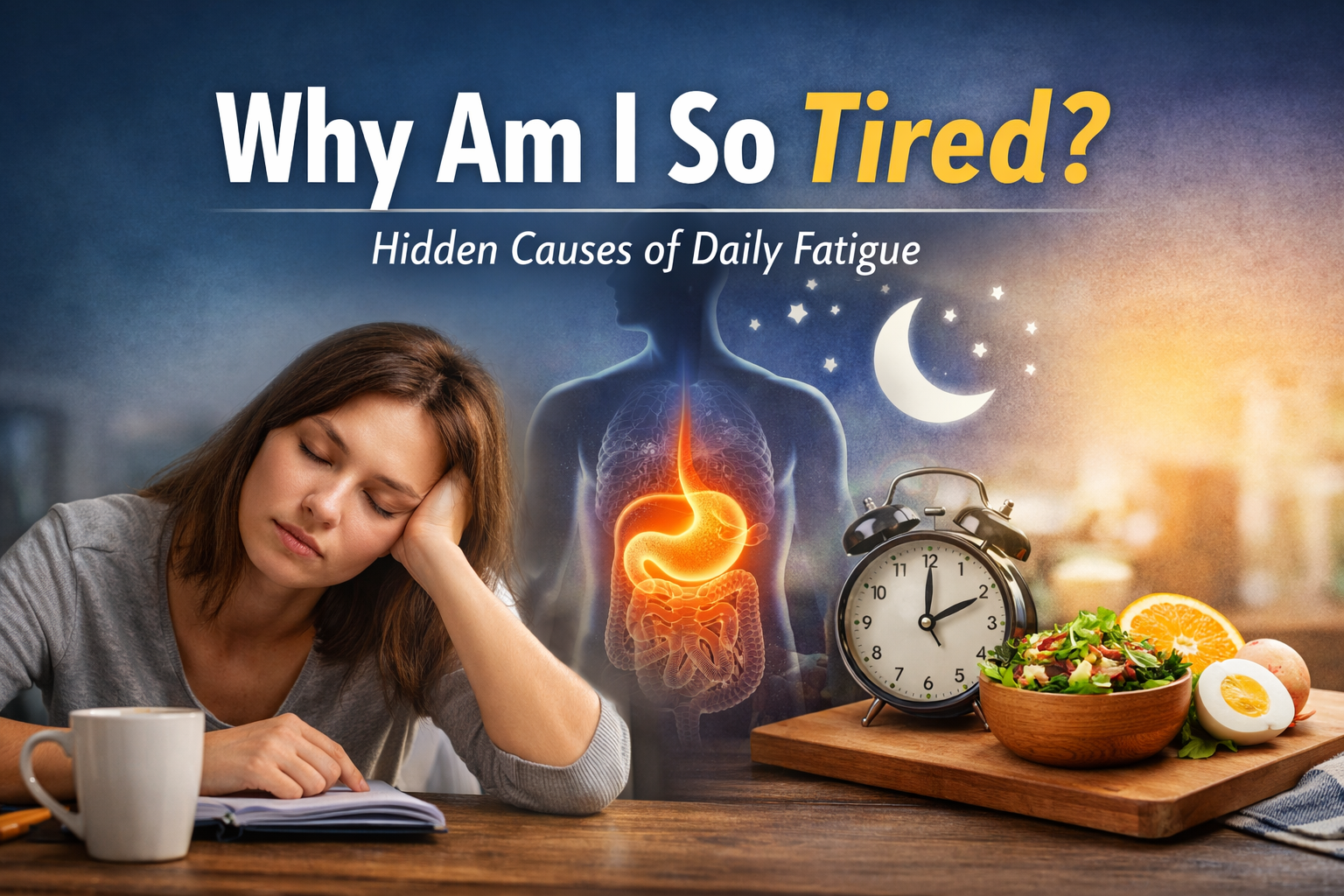
If you rely on coffee (or energy drinks) to get through your day, you’re not alone. Millions of people turn to caffeine as a quick pick-me-up — until one day it just doesn’t feel like it’s helping anymore.
In this post, I will explain why caffeine stops working and what actually supports real, long-lasting energy — breaking down the common causes in a way that makes sense for beginners.
Maybe you’ve found that:
- Your morning cup doesn’t wake you up like it used to
- You need more coffee or energy drinks just to get by
- You still feel tired even after that first caffeine boost
That experience is normal, but it’s not because you lack willpower or motivation. It’s because caffeine doesn’t actually create energy — it just temporarily masks the signals your body sends when it’s tired.
What Caffeine Does (and Doesn’t Do)
Caffeine is a stimulant. That means it temporarily blocks certain receptors in your brain — the ones that tell you you’re tired.
But it does not:
- Produce energy
- Replenish your body’s reserves
- Fix the underlying reasons for fatigue
It simply delays the sensation of tiredness.
According to Harvard Health Publishing, caffeine works by blocking adenosine, a chemical that builds up in your brain and makes you feel tired. That’s why caffeine can make you feel alert for a while — until the effects wear off.
Why Caffeine Eventually Stops Working
Over time, your body adapts — not just to caffeine, but to what’s behind your fatigue. Let’s break down the most common causes that make caffeine less effective.
1. Nutrient Depletion
Your body needs vitamins and minerals to make energy. If you’re low on things like:
- B-vitamins
- Magnesium
- Iron
Then no amount of caffeine will help you produce energy — because your cells literally don’t have what they need to make it.
A 2020 review from the National Institutes of Health notes that deficiency in key nutrients like vitamin B12 and iron is linked with fatigue and low energy.
2. Adrenal Stress and Cortisol Imbalance
Your adrenal glands help regulate your stress response. When you’re under chronic stress, your body produces more cortisol — which in the short term can feel energizing.
But over time, your stress system becomes dysregulated — and that makes caffeine less effective and can even increase fatigue.
A study in Frontiers in Endocrinology explains how chronic stress affects cortisol rhythms and energy levels over time.
3. Sleep Disruption
Caffeine and sleep have a complicated relationship.
Too much caffeine — especially later in the day — can reduce your sleep quality or delay the time it takes to fall asleep. Poor sleep then feeds back into tiredness, creating a cycle that caffeine can’t fix.
The Sleep Foundation reports that caffeine can reduce sleep duration and quality, especially when consumed within six hours of bedtime.
4. Blood Sugar Swings
Blood sugar imbalance — especially dips later in the day — can make you feel tired even after caffeine. This happens because your body shifts from using glucose efficiently to sending stress signals that trigger energy crashes.
Research from the Journal of Endocrinology shows how glucose and energy regulation affect fatigue and metabolic health.
5. Gut Absorption Issues
Your gut is where nutrients are absorbed. If your digestive system isn’t breaking down food well, your body may not absorb the nutrients it needs — even if you’re eating well.

Why “More Coffee” Isn’t the Answer
It’s easy to think that needing more caffeine means you just need more caffeine. But what usually happens is that your body:
- Burns through its short-term alertness
- Doesn’t gain any actual energy reserves
- Develops tolerance to the stimulant effects
- Eventually feels like it’s “not working”
This is not laziness. It’s a sign that the underlying systems that make energy are being taxed.
What Actually Supports Real Energy
Real energy support comes from things that:
- Replenish your nutrient stores
- Improve sleep and recovery
- Reduce stress overload
- Balance blood sugar
This is where a deeper look beyond caffeine is helpful — and where tools like the free health assessment on our homepage come in.
If this resonates with you, the assessment can help pinpoint where your energy blockers might be — not just tell you to drink more coffee.
Next Steps: Understanding Your Energy System
Everyone’s body and lifestyle are different — which is why there’s no one-size-fits-all solution.
If you’re ready to explore what might be behind your tiredness, fatigue, or morning slump beyond caffeine, the free assessment on the blog’s homepage is a good next step.
Once you complete it, you’ll get personalized feedback that can help guide your next moves — whether that’s nutrition, sleep support, stress management, or something else.
And just so it’s clear: taking the assessment doesn’t commit you to purchases — it just gives useful insight
Conclusion
Caffeine can mask tiredness for a while, but it doesn’t address what truly drives energy — your body’s ability to produce, store, and regulate it.
Instead of pushing harder with stimulants, real energy comes from:
- Better nutrient support
- Balanced blood sugar
- Improved sleep
- Reduced stress
These are the long-term levers that make daily energy sustainable.
Affiliate Disclosure: Some links on this page may be affiliate or referral links. If you make a purchase or join through one of these links, I may earn a commission at no additional cost to you. I only share products, services, and resources that I believe may be useful to my readers.
[…] If you’ve ever struggled with energy levels while trying to stay consistent, you may also find this helpful:Why Caffeine Stops Working — and What Actually Supports Real Energy […]
[…] may also find it helpful to read Why Caffeine Stops Working — and What Actually Supports Real Energy, which explains another common reason people feel tired throughout the […]